
Expects exemption of oil and gas profits from minimum alternate tax and all cess in the nature of excise duty are to be subsumed in GST.

India has slashed import of crude oil from Iran by over 26.5 per cent in the financial year ended March 31 as US and European sanctions made it difficult to ship oil from the Persian Gulf nation.

India is deeply concerned over the spike in the price of oil due to the Russia-Ukraine conflict and it is "breaking our back," External Affairs Minister S Jaishankar has said. Addressing a joint press conference with US Secretary of State Antony Blinken after holding bilateral talks, Jaishankar on Tuesday said there is a very deep concern among developing countries about how their energy needs are addressed. Speaking about the Ukraine war, he said: "We have taken the position privately, publicly, confidentially and consistently that this conflict is not in anybody's interest."

From the 30-share blue-chip pack, Mahindra & Mahindra, Zomato, Tata Motors, IndusInd Bank, Reliance Industries, Larsen & Toubro, UltraTech Cement, HDFC Bank, Adani Ports and Bajaj Finserv were among the major laggards. On the other hand, Hindustan Unilever, Tech Mahindra, Nestle, Bharti Airtel and ICICI Bank were among the gainers.

Apart from the emotional value attached to buying gold, the yellow metal offers protection against inflation, interest rate spikes, currency and geopolitical risks, says Anamika Pareek.

Oil prices have declined by more than 60 per cent since January with benchmark crude falling well below $30 per barrel, driven by an acute oil demand decline caused by the coronavirus and a lack of production cuts by OPEC and other oil producing countries.

Indian refiners will buy less oil from Saudi Arabia next month as they snap up supplies outside of the Middle East as part of diversification drive amid weakening domestic fuel demand on the resurgence of COVID-19. State-owned Indian Oil Corporation (IOC) and three other refiners have sought just 65 per cent of the monthly average of about 15 million barrels from Saudi Arabia in May, three sources with knowledge of the matter said. The move follows tensions between India and Saudi Arabia over the Kingdom's hawkish stance on boosting production to cool prices.

Stock markets will be driven by further developments on the US-China tariff war front along with quarterly earnings announcements from IT majors Wipro and Infosys in a holiday-shortened week, analysts said. Global market trends and trading activity of foreign investors would also dictate market movement this week, experts noted.
These so-called 'negative crack spreads' have huge implications for India, which imports crude oil and exports petroleum products. Brent crude oil, the international oil benchmark, was trading at $62 a barrel on Thursday.

India, the world's third-biggest oil consumer, has conveyed to OPEC countries its concern over high oil prices that are threatening to impact the nascent economic recovery after the devastating pandemic. New Oil Minister Hardeep Singh Puri has made phone calls to key OPEC nations to convey the desire for an affordable price for consumers. After calling his counterparts in Qatar and the UAE, he called Organization of the Petroleum Exporting Countries (OPEC) kingpin Saudi Arabia on Thursday evening.

Indian officials will focus on expanding the country's footprint in oil-rich Siberia when they meet their Russian counterparts at the four-day 7th Eastern Economic Forum beginning Monday in Vladivostok. The two sides will discuss the possibility of joint oil exploration in the area and cooperation in running offshore oil and gas fields Western companies are in the process of exiting, officials said in New Delhi. Pavan Kapoor, India's ambassador to Russia, will lead the official-level talks at the summit scheduled September 5-8.
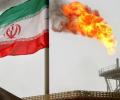
Iran has offered to help India meet its energy needs by relaunching rupee-rial trade for export of oil and gas, said Iranian ambassador to India Ali Chegeni. Chegeni said if both the countries resume rupee-rial trade, bilateral trade can touch $30 billion. Iran used to be India's second largest oil supplier but New Delhi had to halt imports after the former US president Donald Trump withdrew from the nuclear deal with Iran and re-imposed sanctions on its oil exports.

Stock markets would take cues from the biggest event of the week -- the US Fed interest rate decision, besides tracking the trends in global markets and trading activity of foreign investors, analysts said. Last week, a heavy decline in smallcap, midcap firms, foreign fund outflows and elevated crude oil prices in the international market dented investors' sentiments. Experts said equity markets may remain volatile in the near-term amid a host of global central bank's monetary policy decisions lined up during the week.

India imported goods worth $4.23 billion in June from sanctions-hit Russia, up 6.8 times as compared to last year, as demand for shipments of crude oil grew at the fastest pace during the month. Crude oil worth $3.02 billion was imported in June, which translates into a share of 71 per cent of the total imports from Russia, commerce and industry ministry data showed. Similarly, during the April-June quarter, India's imports from Russia were valued at $9.27 billion, up 369 per cent on year.

India's widening current account deficit (CAD), driven by the massive spike in commodity prices led by crude oil, is set to put pressure on the fragile recovery, warns a brokerage report that has revised upwards its CAD forecast to $45 billion or 1.4 per cent of GDP by March. According to a report by British brokerage Barclays, the worries arise from the fact that the trade deficit has been jumping continuously since July. From an average monthly trade deficit of $12 billion till June, it has jumped to $16.8 billion in July-October, with September showing the highest-ever trade deficit on record at $22.6 billion, the report said.

The Indian economy will grow at around 6.5 per cent in the current fiscal, notwithstanding high crude oil prices and increased uncertainty due climate changes, NITI Aayog member Arvind Virmani said on Thursday. Virmani also asserted that the gross household savings ratio in India has consistently gone up. In an interview with PTI, he said: "My growth projection (of India's GDP growth) is 6.5 per cent plus minus 0.5 per cent... because my experience is that the fluctuations in global GDP more or less has balanced out for us, assuming normal changes."

State Bank of India, Tech Mahindra, Larsen & Toubro, Tata Steel, Sun Pharma, Infosys, HCL Tech, Axis Bank, Tata Consultancy Services and NTPC were among the biggest laggards among Sensex shares. Nestle, Hindustan Unilever, Titan, Power Grid, UltraTech Cement and ITC were among the gainers.

Indian Oil Corporation (IOC), the nation's largest oil firm, has renewed a deal to buy up to 2 million tonnes of crude oil in 2022 from Russia's Rosneft, the Russian oil producer said. IOC had in February 2020 signed a deal with Rosneft Oil Company to import up to 2 million tonnes of oil via the port of Novorossiysk. In 2021, the deal envisaged supply of up to 1.7 million tonnes of crude oil but IOC bought just on parcel or shipload as the cost of transporting the oil made it uneconomical, when compared to alternatives. For 2022, the deal is for the supply of up to 2 million tonnes of oil from the Black Sea port of Novorossiysk.
India's oil and gas industry is estimated to be a US$ 110 billion and it is one of the largest contributors to the central and state exchequers.

Closely watched by the world for any escalation, the Iran-Israel conflict is already showing early signs of stress for India Inc - longer deliveries, doubling freight rates, extended working capital cycles, and higher costs. For those yet to feel the heat, there is growing apprehension and nervousness over future developments, observed industry executives.
International oil prices retreated from an over seven-year high but was still above $100 a barrel and continue to pose threat to India's inflation rate and current account deficit. While there are no supply concerns as the oil route remained open, consumers will feel the pinch when PSU oil firms start passing on the increase in international rates through a revision in petrol and diesel prices, which have been on a pause for over three-and-a-half-months in view of elections in Uttar Pradesh and four other states. The government is "closely monitoring the situation" and will "take appropriate steps as and when required", a top official said. Brent crude oil surged past $105 per barrel on Thursday for the first time since August 2014, following Russia's invasion of Ukraine.

For 2015-16, ONGC is targeting a total of 26 MT of oil production.
Concerned over a spike in crude oil prices in international markets due to turmoil in West Asia, Finance Minister Pranab Mukherjee said on Wednesday the government is monitoring the situation and will manage it.
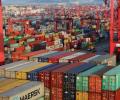
India's exports registered a steepest decline in 13-month falling 9.3 per cent in August to $34.71 billion due to global economic uncertainties, while the trade deficit soared to a 10-month of $29.65 billion. According to the government data released on Tuesday, imports increased by 3.3 per cent to $64.36 billion, which is a record high, due to a significant jump in the inbound shipments of gold and silver.
An oil crisis is set to further hit the fragile global economy.

From the 30-share blue-chip pack, ITC Hotels, IndusInd Bank, Mahindra & Mahindra, Sun Pharma, UltraTech Cement and NTPC were among the biggest gainers. Titan, Kotak Mahindra Bank, Nestle, Asian Paints, HCL Tech and ICICI Bank were among the laggards.

Modi made a strong case for a partnership between the producers and consumers in the oil market as it exists in other markets.

The rupee depreciated further by 13 paise to hit a new life-time closing low of 82.30 against the US dollar on Friday as a firm American currency and risk-averse sentiment among investors weighed on the local unit. Moreover, a negative trend in domestic equities and elevated crude oil prices sapped investor appetite, forex traders said. At the interbank foreign exchange market, the local currency opened at 82.19, then fell further to 82.43. It finally settled at an all-time low of 82.30 against the American currency, registering a decline of 13 paise over its previous close.
With crude oil flirting with the $100 a barrel mark, world's largest oil producer Saudi Arabia is emulating marketing savvy West to showcase oil cartel Organisation of Petroleum Exporting Countries in a new light when it organises the third OPEC Summit in Riyadh this week.
The country's imports from Russia almost doubled to $25.69 billion during the April-August period this fiscal due to increasing inbound shipments of crude oil and fertiliser, according to the commerce ministry data. With this, Russia has become India's second-largest import source during the first five months of this fiscal. The imports were $13.77 billion during April-August 2022.
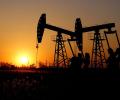
Investors and companies should brace for higher commodity prices over the next few weeks in the backdrop of Russian troops attacking Ukraine on Thursday. Meanwhile, US President Joe Biden threatened new sanctions against Russia for an act of aggression against Ukraine. All this, analysts believe, can push prices of key commodities such as crude oil, ammonia, urea, potash, and phosphates higher.

From the 30-share Sensex blue-chip pack, Tata Steel, Zomato, Larsen & Toubro, Tata Motors, Adani Ports, Tata Consultancy Services, HDFC Bank and NTPC were the major laggards. Nestle, Hindustan Unilever, Mahindra & Mahindra, Kotak Mahindra Bank, Asian Paints and Bharti Airtel were among the gainers.

A massive drone strike on the world's largest crude-processing facility operated by Saudi Arabia's Aramco has driven oil prices to their highest level in nearly four months. The attack has knocked out over half of Saudi Arabia's production as it cut 5.7 million barrels per day or over 5 per cent of the world's supply.

The total investment at risk is $930 billion and oil companies will need to cut their expenses by 30 per cent to make their projects viable provided oil remains around $70 a barrel.
World oil prices shot up to $55 per barrel on Friday following a warning by global investment bank Goldman Sachs that crude oil might have entered a 'super-spike' period which can push up oil prices to an astronomical $105 a barrel.

Russia dominated Saudi Arabia in oil supplies as the world's fastest-growing major economy for fossil fuels in October, relegating the Kingdom to third place. Iraq was India's top oil supplier, according to the data from Vortexa. Saudi Arabia's decline in India's oil market has coincided with Russia's rise, and ironically occurred amid growing diplomatic ties between Riyadh and New Delhi. Saudi Crown Prince Mohammed bin Salman Al Saud is visiting India this month to meet Prime Minister Narendra Modi.
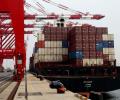
India's imports from Russia rose 64 per cent to $36.27 billion during the April-October period this fiscal on higher shipments of crude oil and fertiliser, according to the commerce ministry data. With this, Russia has become India's second-largest import source during the first seven months of this fiscal. The imports were $22.13 billion during April-October 2022.

The Federal Reserve, whose policy-setting Federal Open Market Committee concludes a two-day meeting on Wednesday, has said it expects to keep short-term interest rates exceptionally low to help support the economy.

Benchmark interest rate hiked by 50 basis points to 3-year high at 5.90 per cent. Economic growth projection for FY23 cut to 7% from 7.2% estimated in August. GDP expected to grow at 6.3% in September quarter, 4.6% each in December and March quarters.

Stocks in the automotive, financial, cement, metal, and hotel sectors are likely to benefit if the Narendra Modi-led Bharatiya Janata Party (BJP) comes back to power for a third time. The key investment themes have been identified after analysing the Sankalp Patra - the party's manifesto for the next five years - released on Sunday.
 © 2026 Rediff.com - Investor Information - Advertise with us - Disclaimer - Privacy Policy - Sitemap - Feedback - About us - Terms of use - Grievances